
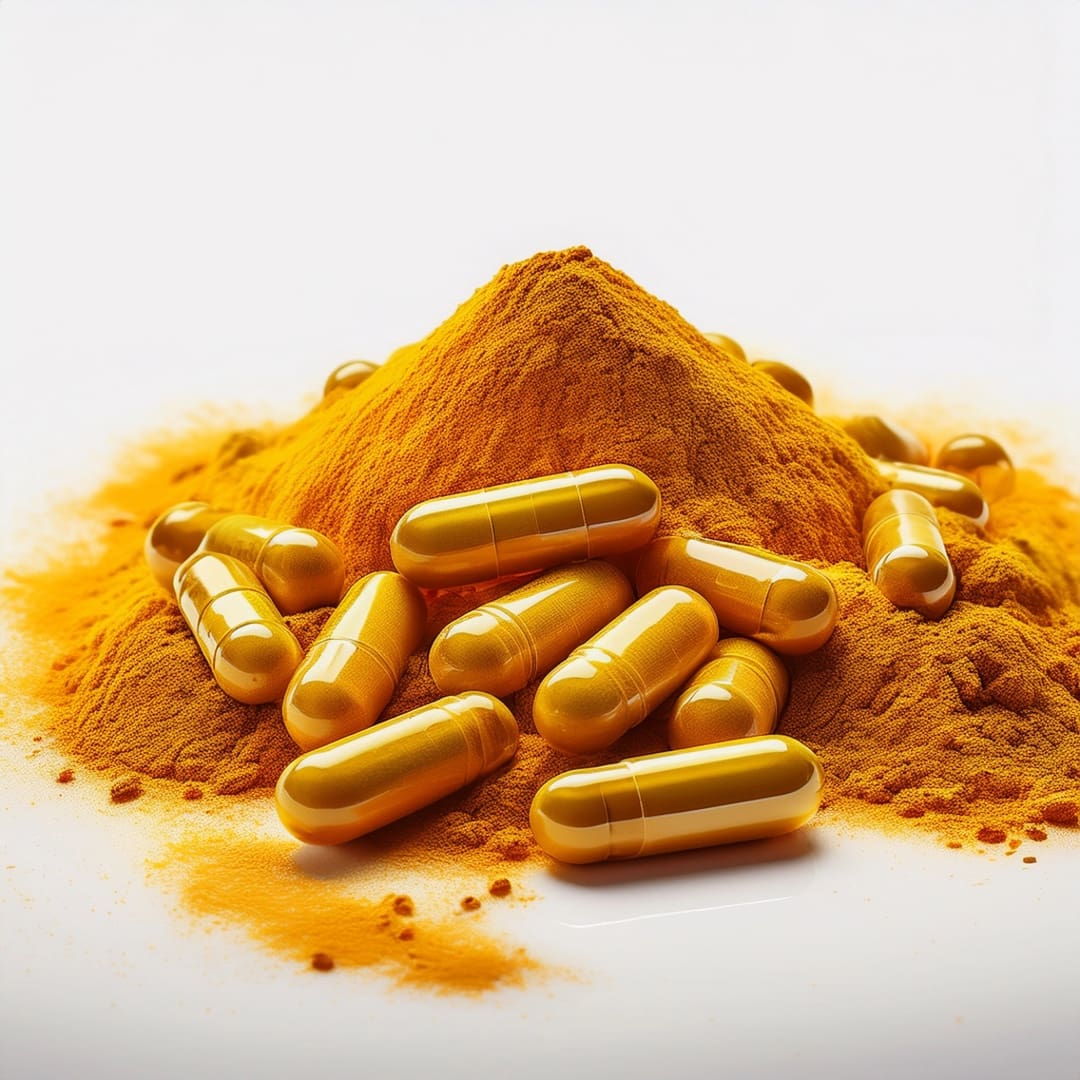
Supplements are meant to plug real gaps—iron if you’re anemic, B-12 if you’re vegan. You do not have a turmeric deficiency.
TL;DR Version (Too Long, Didn’t Read)
Turmeric belongs in curry, not a megadose capsule: the clinical wins are flimsy, absorption is awful, and the downside now spans drug interactions, documented liver injuries, and lead-spiked batches.
Why You Should Care
- Falling Evidence. Most curcumin studies (the major component of turmeric) enroll very few people and rarely replicate. Umbrella reviews keep downgrading the certainty of benefit.1
- Liver warnings are piling up. National case registries and Australia’s TGA flag turmeric (especially “enhanced-absorption” blends) for hepatitis (liver inflammation).2,3
- Lead, yes, lead. Investigators still catch suppliers coloring turmeric with lead chromate to make it look sunnier on a store shelf.4
Grading The Evidence
Influencers pitch turmeric for everything from aching knees to brain fog, but when researchers pool the data (and really interrogate the methodologies and financial conflicts), the effect sizes fizzle or vanish. One 2025 umbrella review found that most “positive” trials were small and methodologically unsound. Specifically, they used a GRADE system that uses explicit criteria to independently evaluate a study’s “quality of evidence”, which includes risk of bias, inconsistency, indirectness, imprecision, and publication bias. When doing so, they found that 88% were graded with a “very low” or “low” methodological quality score, 12% as “moderate”, and no studies were rated as “high-quality”.1
Can Your Gut Even Use It?
Un-formulated curcumin is absorbed so poorly that <1 % ever hits your bloodstream.5 Influencers and wellness companies know this. Their solution: add piperine, the spicy alkaloid in black pepper. Piperine can goose curcumin bioavailability by 20-fold5 by:
- Slowing metabolism—it blocks intestinal glucuronidation and CYP3A4 (breakdown of medications).
- Hobbling efflux pumps—it muzzles P-gp so more curcumin sneaks through.
- Tight-junction loosening—making gut cells a bit leakier.
Sounds great…until you realize the same tricks jack up levels of your prescription meds (warfarin, diabetes drugs, chemotherapeutics), turning that “bioenhanced” wellness shot into a potential pharmacokinetic dumpster fire. Regulators now warn that these turbo-charged blends are the ones most often tied to liver injury.3
Liver Injuries Are Piling Up
Dozens of hepatitis cases now trace back to high-dose turmeric capsules or golden-milk “wellness” shots. Patients typically crash after 6–12 weeks, and labs normalize only when they ditch the supplement. The TGA logged 18 serious events by mid-2023 alone, and recent U.S. case reports echo the trend.2,3 This is likely a significant underestimate of true adverse effects.
Lead-Laced.
Because a brighter yellow sells better, some suppliers still cut raw turmeric with lead chromate. A 2024 environmental survey found lead in spice samples from Bangladesh, India, and import streams reaching North America.4 The highly unregulated nature of the industry fosters these issues.

Official Science Rabbit Mug (15oz)
$15.99

Official Science Rabbit T-shirt – Stay Curious
Price range: $17.78 through $25.23
Bottom Line: Eat It, Don’t Mainline It
Turmeric in normal cooking is fantastic and likely good for you, but we must stop with these miracle pill mentalities of, “If only I can jam a year’s worth of turmeric dosing into a single pill I will be cured”. Unfortunately, there is a billion-dollar business sector and a slick influencer ready to act as your drug dealer when you are feeling unhealthy and in a vulnerable state. Unless a clinician is actively monitoring your liver enzymes and medication levels, keep turmeric where it’s always been safest—in your curry.
References
- Xu, Q., Lian, H., Zhou, R., Gu, Z., Wu, J., Wu, Y. and Li, Z., 2025. Curcumin and multiple health outcomes: critical umbrella review of intervention meta-analyses. Frontiers in Pharmacology, 16, p.1601204.
- Shrestha, A., Elliott, S., Abasszade, J.H., Wu, K., Worland, T., Simpson, I. and Dev, A., 2025. Drug-induced liver injury associated with turmeric and piperine: a case and review. Case Reports in Gastroenterology, 19(1), pp.96-106.
- LiverTox: Clinical and Research Information on Drug-Induced Liver Injury [Internet]. Bethesda (MD): National Institute of Diabetes and Digestive and Kidney Diseases; 2012-. Turmeric. [Updated 2025 Jun 16]. Available from: https://www.ncbi.nlm.nih.gov/books/NBK548561/
- Forsyth, J.E., Mistree, D., Nash, E., Angrish, M. and Luby, S.P., 2024. Evidence of turmeric adulteration with lead chromate across South Asia. Science of the Total Environment, 949, p.175003.
- Shoba, G., Joy, D., Joseph, T., Majeed, M., Rajendran, R. and Srinivas, P.S.S.R., 1998. Influence of piperine on the pharmacokinetics of curcumin in animals and human volunteers. Planta medica, 64(04), pp.353-356.
Author
Andrew Bubak, PhD, MS is a Professor of Neurology with extensive experience researching physiological and neurological health. He has a robust publication record in prestigious peer-reviewed journals and serves as an academic editor for multiple methodologically stringent, high-quality scientific journals.
Leave a Reply