
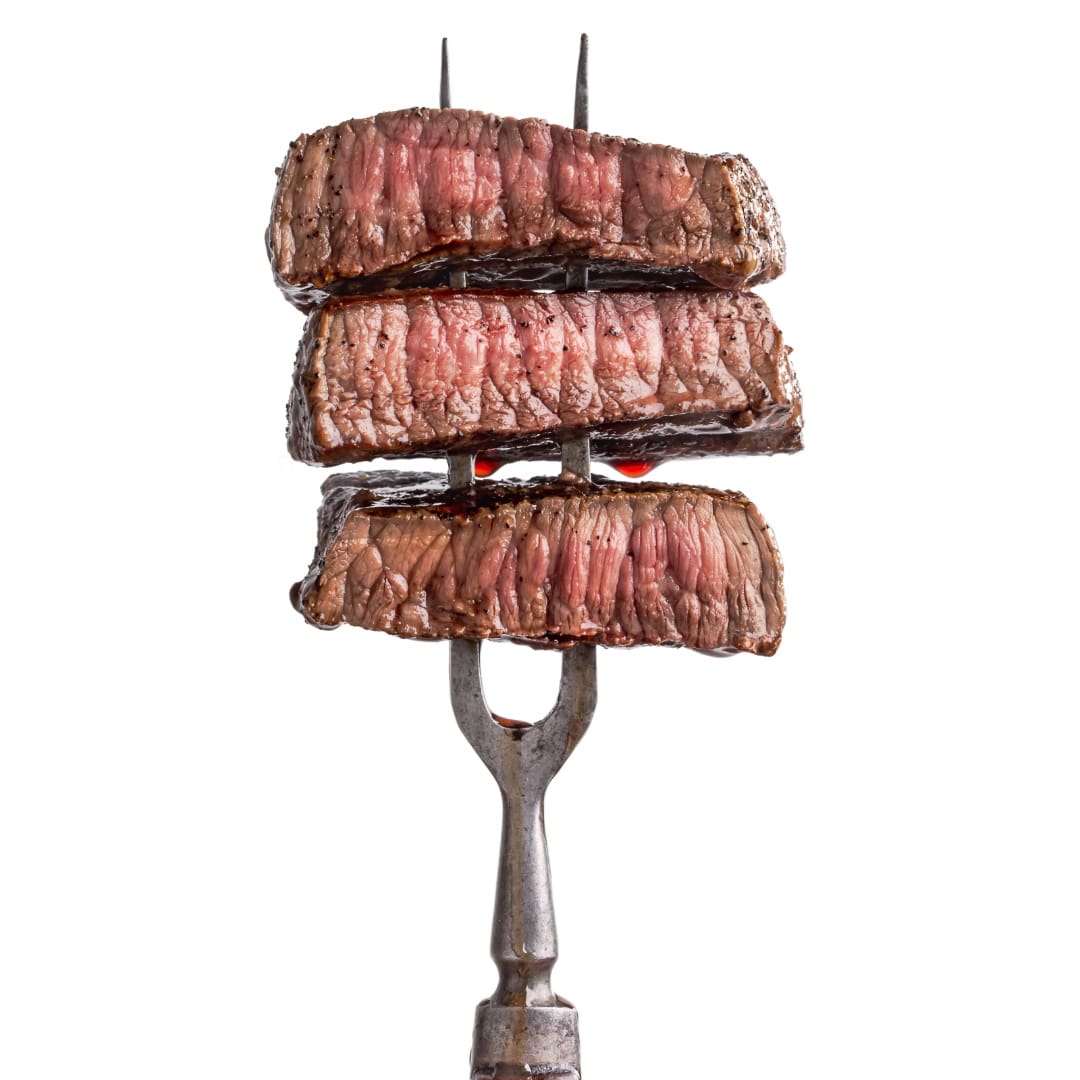
Grass-fed and finished beef has become the go-to for health-conscious meat eaters. It’s leaner, richer in omega-3s, and often promoted as a more natural, nutrient-dense option. But here’s the twist: even the highest quality cut of beef can become harmful if cooked the wrong way.
Let’s break down why your cooking method might be just as important (if not more) than whether your steak is grass- or grain-fed.
The Nutritional Edge of Grass-Fed Beef
Grass-fed and finished beef comes from cattle that eat what cows were meant to eat: grass. Unlike grain-fed animals raised or finished in feedlots, grass-fed cattle generally live more natural lives and produce meat with:
- Higher levels of omega-3 fatty acids (anti-inflammatory)1
- More conjugated linoleic acid (CLA) (linked to fat metabolism and immune support)1
- Fewer total calories and less saturated fat (great for cardiovascular health)1
Sounds great—and it is. But the nutrition of the beef is just one piece of the puzzle.
The Hidden Problem with High-Heat Cooking
Here’s where things get complicated. Cooking beef—any beef—at high temperatures (think grilling, pan-frying, broiling) can create potentially harmful compounds, specifically:
- Heterocyclic amines (HCAs)
Formed when muscle meat is cooked at high temperatures. These compounds have been shown to mutate DNA in lab studies, a risk factor for cancer.2 - Polycyclic aromatic hydrocarbons (PAHs)
Produced when fat drips onto an open flame, creating smoke that can deposit these chemicals back onto the meat. PAHs have been associated with increased cancer risk in both animal and human studies.2
In other words, even your ethically raised, omega-3-rich grass-fed burger isn’t immune if it’s scorched on the grill.
Does Grass-Fed Make a Difference? Yes—But Not in This Case
You might assume that grass-fed beef would produce fewer of these harmful compounds. Unfortunately, the difference is marginal at best. The formation of HCAs and PAHs is driven by heat and cooking duration, not by whether the cow ate corn or clover.
So while grass-fed beef starts with better nutritional value (undoubtably), high-temperature cooking nullifies this.
How to Cook Meat Smarter
Before you throw out your grill or swear off steak, there’s good news: simple tweaks in how you cook meat can dramatically reduce the risks:
- Use marinades.
Marinades with herbs, vinegar, citrus, or olive oil can reduce HCA formation by up to 70% according to some studies.3,4 - Avoid charring or blackened crusts.
That crispy sear is delicious, but it’s where many HCAs form.5 - Cook low and slow.
Opt for baking, roasting, or sous vide. These methods avoid the extreme temperatures that generate toxic compounds. - Flip often.
Turning meat frequently while cooking reduces HCA formation. - Trim the fat.
Less fat = less flare-up = fewer PAHs.
Bottom Line: Quality and Technique Go Hand-in-Hand
Yes, grass-fed beef is a healthier, more sustainable option. But how you cook your meat might be the real game-changer when it comes to long-term health.
If you’re investing in better food, don’t undo the benefits in the kitchen. Think beyond what’s on your plate—think about what’s happening on the pan.
- Daley, C.A., Abbott, A., Doyle, P.S., Nader, G.A. and Larson, S., 2010. A review of fatty acid profiles and antioxidant content in grass-fed and grain-fed beef. Nutrition journal, 9(1), p.10.
- Jägerstad, M. and Skog, K., 2005. Genotoxicity of heat-processed foods. Mutation Research/Fundamental and Molecular Mechanisms of Mutagenesis, 574(1-2), pp.156-172.
- Gibis, M., 2007. Effect of oil marinades with garlic, onion, and lemon juice on the formation of heterocyclic aromatic amines in fried beef patties. Journal of agricultural and food chemistry, 55(25), pp.10240-10247.
- Gibis, M., 2016. Heterocyclic aromatic amines in cooked meat products: Causes, formation, occurrence, and risk assessment. Comprehensive Reviews in Food Science and Food Safety, 15(2), pp.269-302.
- Zheng, W. and Lee, S.A., 2009. Well-done meat intake, heterocyclic amine exposure, and cancer risk. Nutrition and cancer, 61(4), pp.437-446.

Leave a Reply