
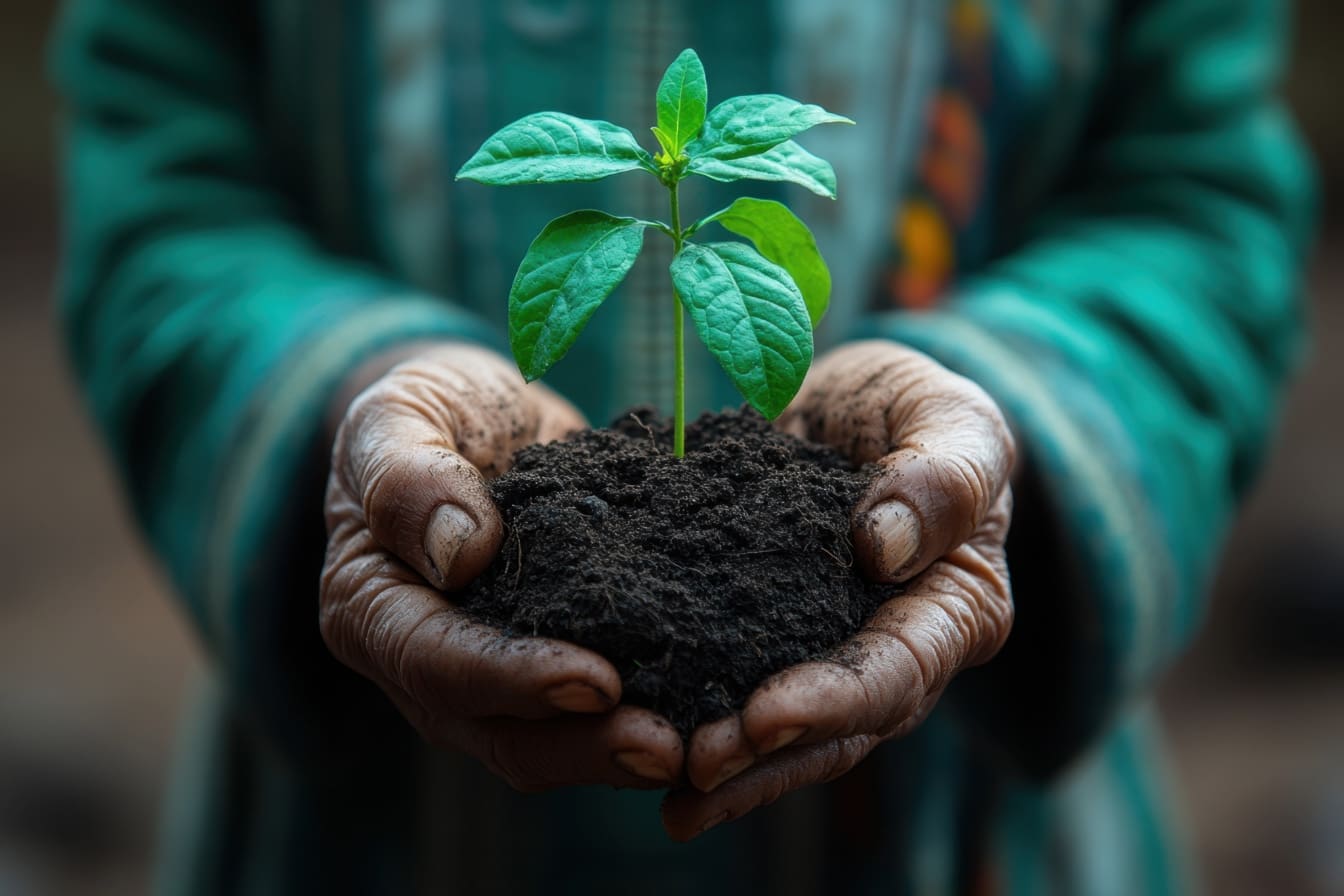
Gardening belongs in the brain-health conversation. It’s more than just light exercise and eating vegetables. It’s layered biology: movement, daylight, sensory load, purpose, social contact, and…dirt. That last piece matters because soil is a microbial super-ecosystem. Re-exposure to these “old friends” appears to train immune tolerance, calm background inflammation, and improve stress handling—pathways that map onto brain aging (think T-cells/IL-10, more on that below). We don’t have a smoking-gun clinical trial proving “gardening prevents Alzheimer’s,” but the epidemiology is encouraging, the mechanisms are plausible, and the interventional data from horticultural therapy are real enough to take seriously.
Epidemiology: the signal (and its limits)
A famous early flag came from Australia’s Dubbo Study, where daily gardening tracked with a ~36% lower risk of dementia after adjustment.1 Replications aren’t identical, but they rhyme: a 2024 Chinese national cohort of very old adults found that more frequent garden work was associated with lower incident dementia, and other cohorts report similar patterns for field work/gardening and better late-life cognition.2 These are observational datasets—selection and reverse causation are live issues—but they’re consistent.
Short-term studies show bigger benefits than long-term ones, which hints at ‘reverse causation’—people cutting back on activities as decline begins.3 Translation: gardening helps by delivering movement, daylight, microbes, and purpose, but it isn’t a cure-all on it’s own.
Mechanisms: why dirt + plants + daylight could protect aging brains
Soil microbes & immune education (the “old friends” pathway)
Modern life strips away microbial diversity. The Old Friends idea predicts that re-exposure nudges regulatory circuits (↑Tregs/IL-10), damping sterile inflammation that chips away at brain health. Enter Mycobacterium vaccae (NCTC 11659). In rodent models, immunization with heat-killed M. vaccae prevents stress-induced spikes in hippocampal IL-6 (pro inflammatory molecule) and promotes stress-resilient coping—a biologically plausible lever on neuroinflammation.4,5
Humans aren’t mice, but there are translational breadcrumbs: a paired randomized trial in adults found that short-term skin exposure to microbially rich soil measurably modulated cell-mediated responses to a pneumococcal vaccine.6 Meanwhile, daycare biodiversity interventions (forest-floor + sod + planters) have diversified children’s skin/gut microbiota and tilted cytokines toward immune regulation in weeks.7 The principle that environmental microbes can tune immunity—holds.
Quick note: Potting soil ≠ natural dirt. Treat commercial mixes and any pesticides/herbicides with respect; dust-minimize and minimize chemical exposures (common sense, label-following).
Stress physiology, NK cells, and neuroinflammation
Nature exposure carries stress-immune dividends. Controlled “forest bathing” experiments in Japan report sustained increases in natural-killer (NK) cell activity and anti-cancer protein expression after brief trips, alongside lower stress hormones. Gardening is a replicable, at-home way to tap similar physiology.8
Cardiometabolic & vascular brain health (the movement layer)
Light-to-moderate movement improves insulin sensitivity, vascular health, sleep, and mood—upstream determinants of cognitive aging. In UK Biobank, higher daily steps (especially purposeful/peak-cadence steps) associate with lower incident dementia; benefits appear well below the folk 10k-step threshold.9 Gardening supplies exactly this kind of sustainable, accumulate-as-you-go activity.
Cognitive engagement, purpose, and social input
Gardening isn’t rote. It demands planning, troubleshooting, seasonality, sensory novelty, and often community. Those ingredients overlap with the “stimulating leisure” portfolios repeatedly tied to better near-term dementia risk profiles—even if some of that advantage reflects healthier brains choosing richer activities.3



Clinical & Interventional Evidence
This isn’t just theory. Horticultural therapy (HT)—structured, typically outdoor gardening activities—has been tested in older adults with dementia. A 2024 systematic review/meta-analysis of clinical trials reports improvements in cognition, depressive symptoms, daily activities, and quality of life versus usual care, with stronger effects in outdoor, ≥2×/week programs.10 More studies need to be completed to confirm these findings but, again, the trends are similar.
What We Don’t Know (yet)
- Causality & components: How much of gardening’s benefit is microbial exposure versus movement, daylight, plant volatiles, problem-solving, and social contact? We need factorial trials that hold activity/social dose constant while manipulating soil microbial richness (sterile media vs live soil), with immune and cognitive readouts. Early daycare and adult soil-exposure trials show this design is feasible.7,8
- Dose & durability: Frequency/seasonality of hands-in-soil needed to sustain induced immune signatures and map to cognition over years remains unknown.
- Who benefits most: Late-life starters with high inflammatory tone? Vascular burden? APOE ε4 carriers? Open questions worth testing.
The Take Home
Gardening is not a single bullet; it’s a delivery system for multiple brain-relevant levers: movement, daylight/circadian support, microbial re-exposure, stress reduction, cognitive engagement, and social connection. The population data point in the right direction (with caveats), the mechanisms are biologically coherent, and HT trials show that packaging these ingredients into regular, outdoor activity can move clinical needles we care about. Reasonable takeaway: for many older adults, a small plot may be one of the most practical, scalable brain-health tools we have—just remember that store-bought potting mix isn’t natural soil, and be cognizant of pesticide/herbicide exposures as you build a routine.
Author
Dr. Andrew Bubak, PhD, MS is a neuroscientist and professor that studies the physiological mechanisms underlying neurodegenerative diseases such as dementia and vascular disease.
References
- Simons, L.A., Simons, J., McCallum, J. and Friedlander, Y., 2006. Lifestyle factors and risk of dementia: Dubbo Study of the elderly. Medical Journal of Australia, 184(2), pp.68-70.
- Wang, J., Liu, D., Guo, C., Duan, Y., Hu, Z., Tian, M., Xu, Q., Niu, Y. and Yan, G., 2024. Association between garden work and risk of incident dementia in an older population in China: a national cohort study. Public Health, 232, pp.74-81.
- Heikkilä, K., Pentti, J., Dekhtyar, S., Ervasti, J., Fratiglioni, L., Härkänen, T., Kivimäki, M., Koskinen, S., Ngandu, T., Stenlund, S. and Suominen, S., 2024. Stimulating leisure-time activities and the risk of dementia: a multi-cohort study. Age and Ageing, 53(7), p.afae141.
- Loupy, K.M., Cler, K.E., Marquart, B.M., Yifru, T.W., D’Angelo, H.M., Arnold, M.R., Elsayed, A.I., Gebert, M.J., Fierer, N., Fonken, L.K. and Frank, M.G., 2021. Comparing the effects of two different strains of mycobacteria, Mycobacterium vaccae NCTC 11659 and M. vaccae ATCC 15483, on stress-resilient behaviors and lipid-immune signaling in rats. Brain, behavior, and immunity, 91, pp.212-229.
- Amoroso, M., Böttcher, A., Lowry, C.A., Langgartner, D. and Reber, S.O., 2020. Subcutaneous Mycobacterium vaccae promotes resilience in a mouse model of chronic psychosocial stress when administered prior to or during psychosocial stress. Brain, behavior, and immunity, 87, pp.309-317.
- Roslund, M.I., Nurminen, N., Oikarinen, S., Puhakka, R., Grönroos, M., Puustinen, L., Kummola, L., Parajuli, A., Cinek, O., Laitinen, O.H. and Hyöty, H., 2024. Skin exposure to soil microbiota elicits changes in cell-mediated immunity to pneumococcal vaccine. Scientific Reports, 14(1), p.18573.
- Roslund, M.I., Puhakka, R., Grönroos, M., Nurminen, N., Oikarinen, S., Gazali, A.M., Cinek, O., Kramná, L., Siter, N., Vari, H.K. and Soininen, L., 2020. Biodiversity intervention enhances immune regulation and health-associated commensal microbiota among daycare children. Sci Adv 6: eaba2578. The 2022 report of the Countdown on health and climate change: health at the mercy of fossil fuels. Lancet, 400, pp.1619-1654.
- Li, Q., Morimoto, K., Nakadai, A., Inagaki, H., Katsumata, M., Shimizu, T., Hirata, Y., Hirata, K., Suzuki, H., Miyazaki, Y. and Kagawa, T., 2007. Forest bathing enhances human natural killer activity and expression of anti-cancer proteins. International journal of immunopathology and pharmacology, 20(2_suppl), pp.3-8.
- del Pozo Cruz, B., Ahmadi, M., Naismith, S.L. and Stamatakis, E., 2022. Association of daily step count and intensity with incident dementia in 78 430 adults living in the UK. JAMA neurology, 79(10), pp.1059-1063.
- Wang, M., Qian, Y., Yu, X. and Xing, Y., 2024. Effectiveness of Horticultural Therapy in Older Patients With Dementia: A Meta‐Analysis Systemic Review. Journal of Clinical Nursing, 33(12), pp.4543-4553.

Leave a Reply